If we’re talking about the most popular online buying and selling channels today, it’s got to be marketplaces — the ones everyone knows, like Lazada, Shopee, and TikTok Shop. And naturally, with more attention comes more competition among online stores on these marketplaces, since similar or identical product categories push buyers to compare before they buy. To manage that risk, online stores need to pay attention to several factors in order to compete effectively and grow the brand sustainably over the long run. SLA is the service-level agreement sellers must follow. So in this article, we’ll talk about the factors that help a store earn a good rating, boost sales, and increase customer satisfaction — namely SLA (Service Level Agreement).
Of course, having a good store rating isn’t easy, since customer expectations keep rising. Maintaining a solid SLA standard helps build customer confidence — from how quickly orders are processed and shipped, to product quality matching what’s listed, to professional customer service. All of these directly impact a business’s long-term success and sustainability.
What Is an SLA?
Service Level Agreement or SLA is a service agreement between a store and a selling platform, used to measure the quality of a store’s fulfillment. Following a platform’s SLA helps a store avoid penalty scores, join major campaigns, increase sales opportunities, and create a great experience for customers.
What Does an SLA Include?
When running an online business on a marketplace, sellers need to prioritize service standards, or SLA, to build credibility and trust with customers. The main SLA components sellers should focus on are as follows:
- Scope and Limitations of Service Clearly defines the scope and conditions of the service, such as the types of products sold, shipping areas, and any limitations that could affect service, so customers understand and receive service that matches their expectations.
- Service Timeframes Sets clear time frames for each step of the process — from receiving the order, preparing the product, and shipping, to resolving issues if something goes wrong — to keep service efficient and within the required standard.
- Agreement Cancellation Clearly sets out the conditions and steps for canceling an order or service agreement, including refund and compensation policies, to ensure fairness and transparency in transactions.
Why SLA Matters
SLA is a key tool for measuring and controlling an online store’s service quality. Maintaining a good standard boosts your store’s credibility and builds customer confidence. It affects not only customer satisfaction, but also directly impacts your product’s ranking and visibility on the platform. Stores with a strong SLA record often get special perks from the platform, such as better placement in search results, quality badges, or access to special campaigns. It also benefits your store’s performance long-term, especially impressions for your products on the marketplace, which increases your chances of making more sales.
What Are the 3 SLA Metrics for Each Marketplace, and Why Do They Matter?
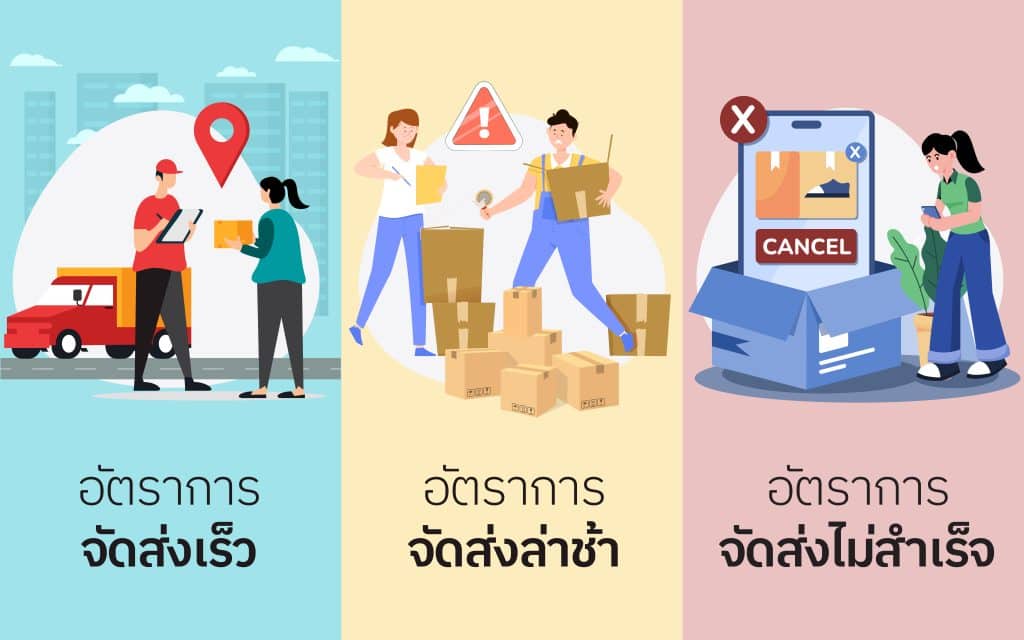
Fast Shipping Rate, Late Shipping Rate, Failed Shipping Rate — these are the 3 metrics stores should prioritize focusing on first, because if you get these right, your other metrics tend to follow suit. Understanding what an SLA is matters a great deal — but falling short of the platform’s required standard can bring penalties, ranging from reduced product visibility, being barred from joining sales campaigns, daily order limits, all the way up to a temporary or even permanent store suspension. If you sell online through a marketplace, don’t just focus on sales — make sure you pay attention to this too. Let’s start understanding the first metric.
1. Fast Shipping Rate
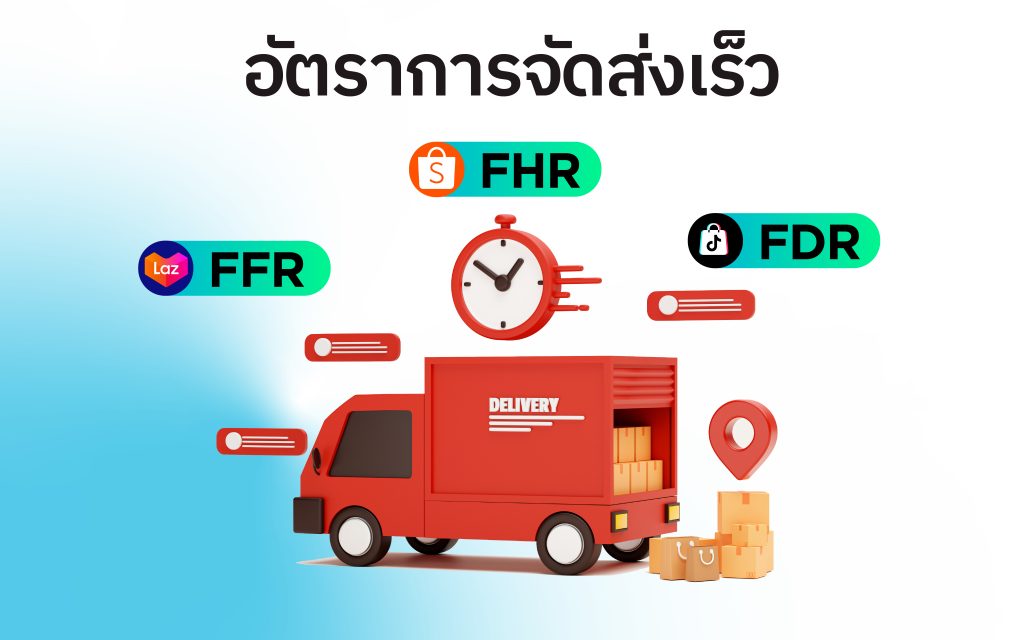
The rate of orders confirmed as handed over to the courier within the platform’s required time frame. This differs by platform, as follows:
1. Shopee FHR or (Fast Handover Rate) — the fast shipping rate must be ≥ 80%, calculated from all orders placed in the trailing 30 days. Stores must hand off parcels to the courier within the following time frames:
Shopee’s Fast Handover Rate calculation criteria
- Orders confirmed before 12:00 PM: the store must hand the parcel to the courier by 11:59 PM the same day the order was received and confirmed (must ship that same day).
- Orders confirmed after 12:00 PM: the store must hand the parcel to the courier by 11:59 PM the following day after the order was confirmed.
2. Lazada FFR (Fast Fulfilment Rate) — the fast shipping rate must be ≥ 80% or higher. Stores must get the order into RTS (Ready to Ship) status within 24 hours and hand the parcel to the courier within 48 hours. In simple terms, to meet the platform’s requirement, you need to process the order within 1 day, or 24 hours, immediately after the customer completes payment.
3. TikTok FDR (Fast Dispatch Rate) — the fast shipping rate must reach 85%, calculated as the percentage of all paid orders (over a rolling 30 days) handed over to the courier within the following time frames:
- Orders placed before 12:00 PM must be handed over to and scanned by the courier by 11:59 PM the same business day (Monday–Saturday).
Orders placed after 12:00 PM must be handed over to and scanned by the courier by 11:59 PM the following business day.
2. Late Shipping Rate
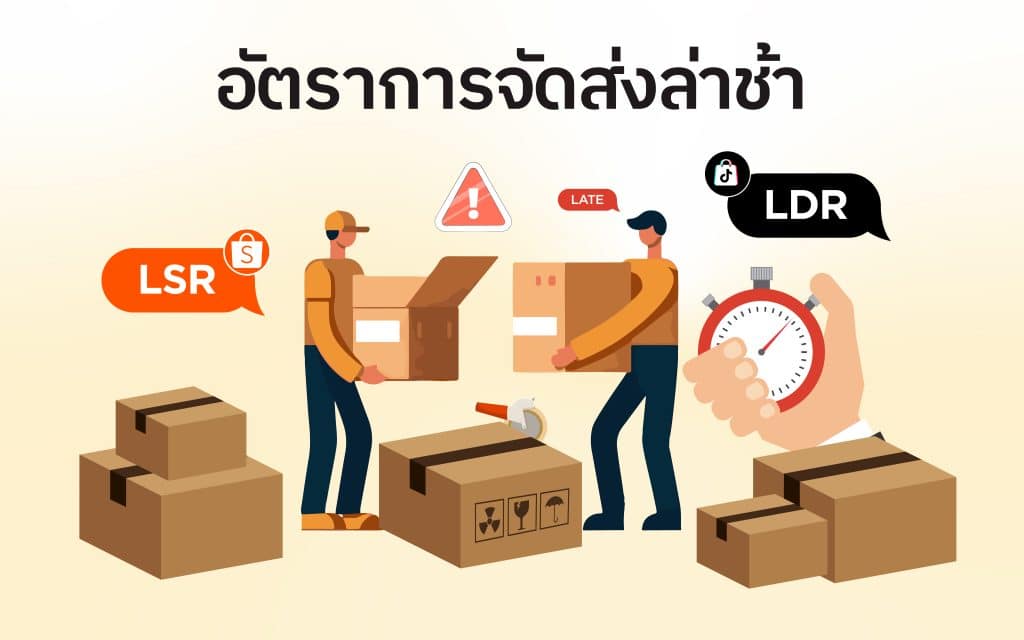
This can happen for several reasons — a store can’t ship because it’s out of stock, or has a large volume of orders but not enough staff to pack them, causing orders to sit in the system and driving up the late-shipping rate. Worse still, a late order can end up canceled altogether.
- Shopee Late Shipment Rate (LSR) — stores must keep their late-shipping rate at no more than 15% over the trailing 7 days. If a store has orders shipped later than required, it receives a conduct penalty score and may also lose various platform benefits.
- TikTok Shop uses the abbreviation LDR (Late Dispatch Rate). Stores should keep their LDR under 10%, calculated as the percentage of all orders (over the trailing 7 days) that were not updated to “Shipped” within 1 business day (by 11:59 PM) from the date the order was placed.
Lazada — on Lazada, there isn’t a direct late-shipping-rate metric, but stores can use the Fast Fulfilment Rate (FFR) metric as a benchmark to evaluate their own shipping performance.
3. Failed Shipping Rate
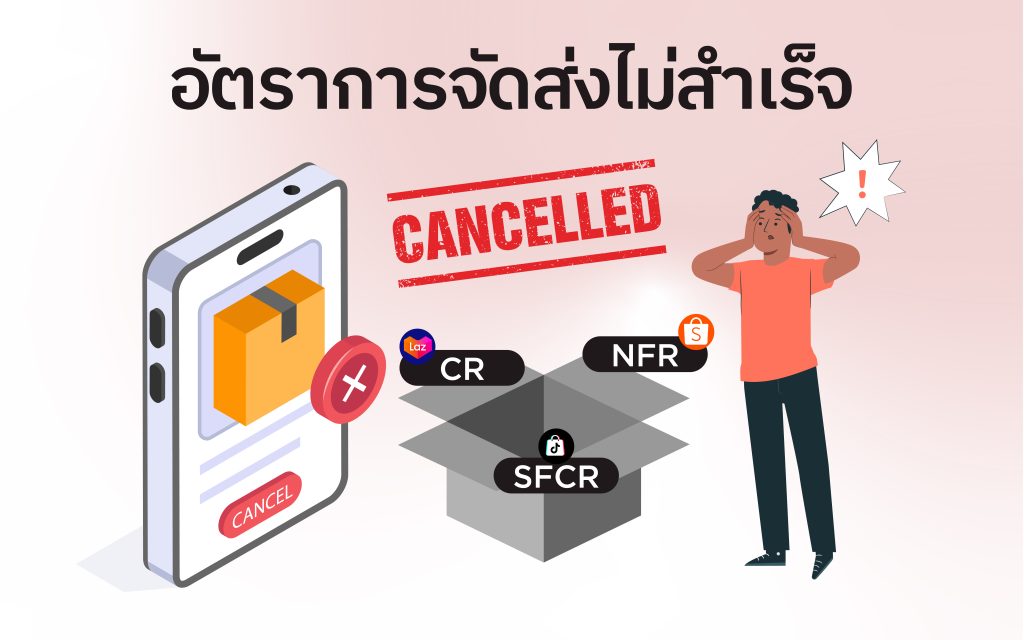
The failed shipping rate, also known as the order cancellation rate, can happen from either the buyer’s or seller’s side, or even be canceled automatically by the platform. For this metric, we’ll focus on cancellations that happen due to seller error, which can occur for several reasons: the seller cancels the order themselves because the product is out of stock and can’t be shipped, or the order gets auto-canceled by the system because the seller failed to ship within the required time. Let’s look at the cancellation-rate benchmarks for each sales channel.
- Shopee NFR (Non Fulfilment Rate) stores must keep their cancellation rate at no more than 10%, measured against the total number of orders canceled and refunded (over the trailing 7 days). Besides seller- and system-initiated cancellations, this rate can also come from returns — for example, a buyer requesting a return because the item arrived unusable, or due to packing errors such as sending the wrong item, an incomplete order, or missing components.
- Lazada CR% (Cancellation Rate) calculated from all orders over the trailing 28 days, stores should keep their cancellation rate under 5%, since exceeding it can result in a daily order limit. And if the cancellation rate during a campaign period reaches as high as 10%, the store may be barred from joining special campaigns, costing you sales opportunities during that period.
- TikTok Shop’s CR (Cancellation Rate) is calculated from all orders over the trailing 7 days, and sellers must keep their cancellation rate at no more than 10%, or face a platform penalty of 2 violation points. If that 10% includes more than 30 canceled orders, it results in 4 violation points. TikTok Shop’s violation-point system has its own tiered penalty thresholds, and in the worst case, a store can be shut down entirely.
Summary: What Is an SLA? Understanding It Across Each Marketplace
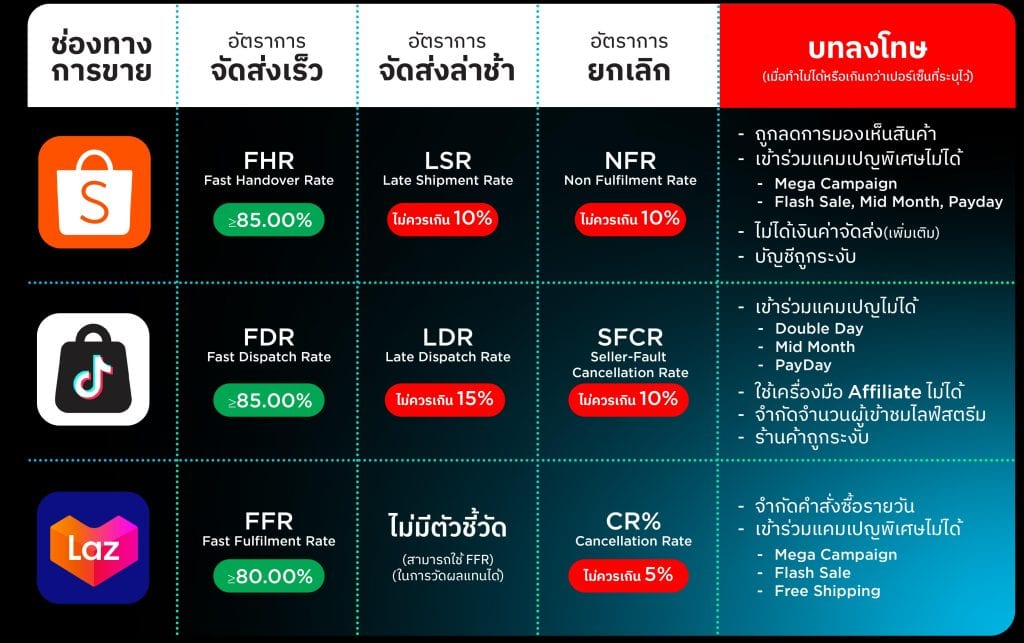
If you sell online through any of the channels mentioned above, you can compare your own numbers against the table above for a clearer picture, and to check what penalties apply if you fall short of or exceed the required threshold. (Data updated November 2024)
How Do You Avoid Penalties?
For all 3 metrics above, stores should keep their fast-shipping rate in good standing to prevent a high late-shipping rate and cancellation rate. And if you’d rather not worry about whether you’re hitting the platform’s required thresholds, you can use a Fulfillment service to help manage order handling, packing, shipping, and stock management for you. Not only does it take the worry about these metrics off your plate, it also frees up your time to focus on more important priorities, like marketing to boost your brand’s sales or taking care of customers reaching out through chat.
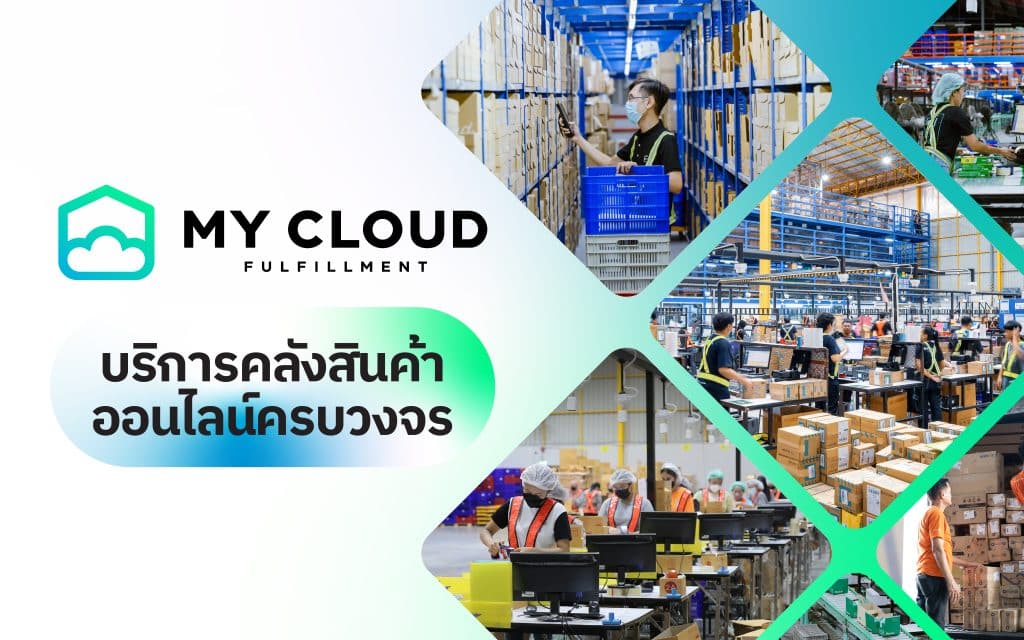
MyCloud Fulfillment offers a full-service online warehouse, including order management powered by our Order Management System, a modern API connecting every sales channel, with real-time order and stock updates every 3 minutes. We pull orders directly from your marketplace back office to pack and hand them off to couriers at the warehouse in time to meet your SLA windows — so you never have to sit and check what your fast-shipping, late-shipping, or cancellation rate looks like. With MyCloud’s warehouse service, we guarantee fast shipping thanks to a professional team working around the clock, 24/7, with a warehouse that never closes. If you’re interested in MyCloud Fulfillment’s full-service online warehouse, feel free to reach out and consult with us first
Frequently Asked Questions About SLA
SLA (Service Level Agreement) is the service-level agreement sellers must follow. It’s a key tool for measuring and controlling an online store’s service quality.
The scope and limitations of service, service timeframes, and agreement cancellation — covering everything from receiving the order and preparing the product to shipping, refund policies, and compensation.
Shopee FHR (Fast Handover Rate) must be ≥ 80%, calculated from all orders over the trailing 30 days. Orders confirmed before 12:00 PM must be handed to the courier by 11:59 PM the same day; those confirmed after 12:00 PM must be handed over by 11:59 PM the next day.
Lazada FFR (Fast Fulfilment Rate) must be ≥ 80% or higher. Stores must get the order into RTS (Ready to Ship) status within 24 hours and hand the parcel to the courier within 48 hours.
Maintaining a good SLA standard boosts a store’s credibility, builds customer confidence, and helps a store earn a good rating, which in turn helps increase sales.
SLA clearly sets out the conditions and steps for canceling an order or service agreement, including refund and compensation policies, to ensure fairness and transparency in transactions.