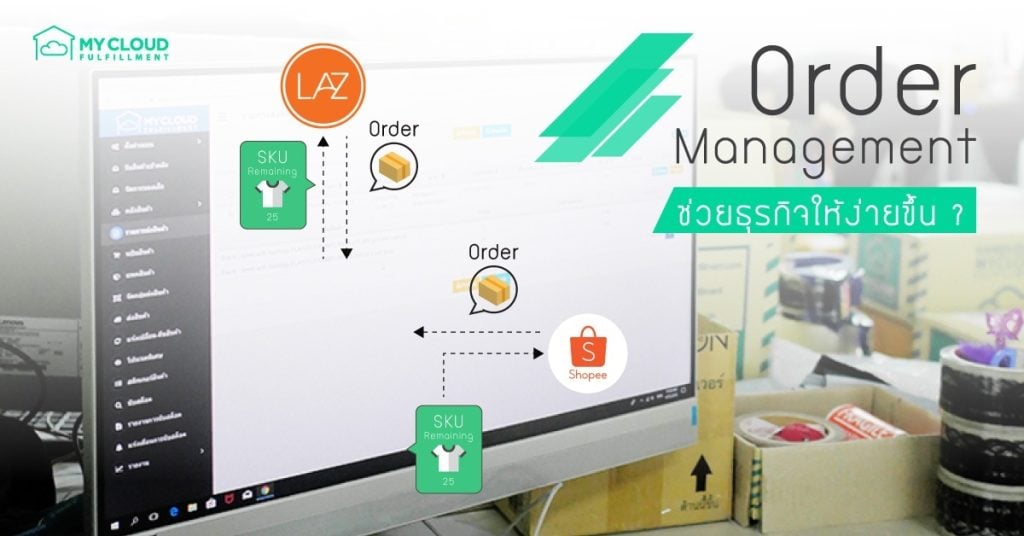

The E-Commerce market keeps growing alongside increasingly fierce competition. Beyond a great product, businesses also need fresh sales strategies and techniques to win customers over and keep up with ever-changing buyer behavior. Today, all kinds of businesses are entering the online sales market, connecting with customers through various channels — from E-Commerce websites and marketplaces like Lazada and Shopee, to social media selling (Social Commerce), using tools like livestreaming and advertising to make selling easier.
But did you know? Most social media users don’t like seeing posts that sell directly, since they see these platforms as a place to follow people, communicate, and focus on lifestyle rather than shopping. Still, since social media offers huge potential to reach customers directly, today — for businesses looking to boost sales performance and sales opportunities on social media — MyCloud has some ‘selling without selling’ techniques to help you win customers over.
1. Relationship — Win Customers Over
Ever heard the phrase ‘selling is all about building relationships’? It really is true. Building a good relationship between the customer and your brand or seller is the key to winning them over. While product details and pricing matter when giving customers the information they need to decide, without building a relationship with the buyer, you could miss out on long-term sales opportunities. So even in a digital age full of advanced sales tools, relationship-based selling remains a crucial tactic for building customer loyalty to your brand — not only retaining current customers long-term, but also building the trust that leads to referrals for new customers.

2. Nobody Cares About Your Product
Don’t panic just yet! This technique is a reminder for sellers to highlight the features that solve customers’ problems, rather than just talking about or advertising your product’s strengths alone. No matter how good a product is, if it doesn’t meet a need or solve a customer’s pain point, they’re unlikely to decide to buy, right? So communicating and talking with customers helps sellers pull out the right, relevant strengths of their product to sell. So remember: nobody cares about your product — they care about how it can help them.
3. Give It Away Free
This technique doesn’t mean giving away free products. It refers to not selling with direct sales posts alone, which customers tend to ignore and scroll past easily — whether on social feeds or your own website. ‘Giving away free’ here means sharing knowledge or useful information related to your products and services. Beyond building relationships (useful, interesting information naturally attracts followers), it also builds trust in your brand. A brand can offer other interesting content beyond direct selling, focusing on helping rather than selling sometimes — to win the customer’s heart.

4. Sell With Precision, Not Just Directly
There are many possible sales strategies. One is to plan a step-by-step product rollout, or break down the information you share with customers to avoid coming across as too pushy. A good first step is to start by talking with or advising customers. For example, if you sell beauty products, start by advising customers on their skin concerns. Educate your target customers about their problem or how to solve it — the key point to remember is how your product can be the solution or answer for the customer.
And once you’ve explored where the customer’s pain points are, you can adjust how you pitch your product to match those needs precisely.
5. Move On
A relationship that isn’t working out? Let it go and move on. And no, we’re not talking about romance here — we’re talking about sales! If you’ve spent time building a relationship with a potential customer, listened to their problems, and offered the right solution and product, but they still show no interest in what you’re offering or in buying, don’t waste your time. Move on — you don’t need to sell to everyone to succeed or hit your sales targets, right? Better to look for new markets or other target audiences instead.
So, what do you think of these modern selling techniques that work for both sellers and today’s buyers? Selling by shouting ‘buy this!’ just doesn’t work anymore. Building a relationship with customers is the first step to winning their hearts. The other techniques above are also worth trying — they help sellers communicate more honestly with customers and get closer to the point of purchase decision. Because patient, relationship-based selling leads to long-term sales, repeat purchases, and word-of-mouth referrals. ^^
For questions about our services or advice on online selling, visit us at www.mycloudfulfillment.com
Or contact us for more information
Call: 021389920
Email: [email protected]
Line: @mycloudgroup
MyCloudFulfillment — Sell with ease, no inventory handling needed
Full-service online warehousing: store, pack, and ship
Frequently Asked Questions (FAQ)
There are 5 main techniques: 1) Build a relationship with the customer 2) Focus on solving the customer’s problem, not the product itself 3) Give away free knowledge before selling 4) Sell with precision, not directly, and 5) Know when to move on if the customer isn’t interested
Because ‘selling is all about building relationships.’ Building a good relationship helps win customer loyalty to your brand long-term, retains existing customers, and leads to referrals for new customers.
It means customers aren’t interested in the product itself, but in how it solves their problem or pain point. Sellers should highlight the features that solve customer problems, rather than just talking about the product’s strengths.
It doesn’t mean giving away free products, but sharing useful knowledge or information about your products and services. This builds trust and relationships with customers, instead of posting direct sales content that customers tend to scroll past.
Start by talking with or advising customers to solve their problems first — for example, advising on skin concerns before selling beauty products — to explore their real pain points, then adjust your sales pitch to match their needs precisely.
It means not wasting time on customers who show no sign of interest in buying, even after you’ve built a relationship and offered a solution. Look for new markets or other target audiences instead, since you don’t need to sell to everyone to succeed.